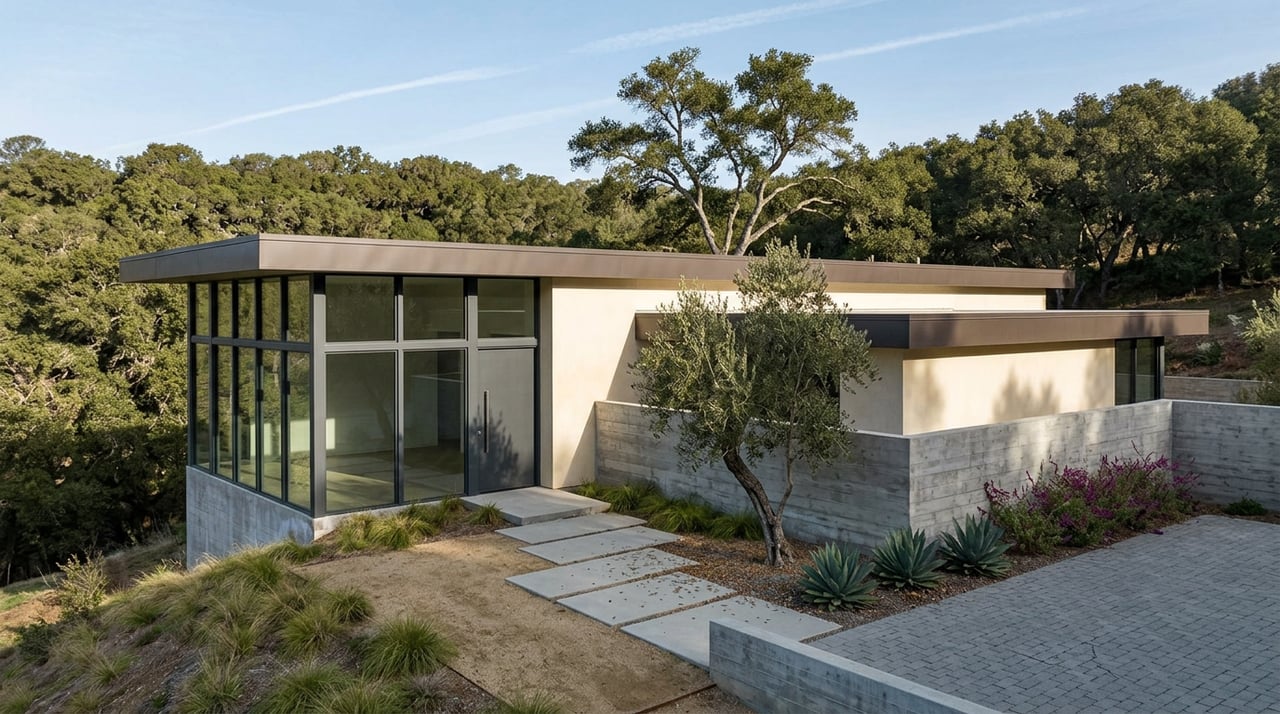
In Glendale's Hillside Neighborhoods, Insurance Is the New Closing Contingency
September 24, 2026
September 24, 2026
The appraisal came in at value. The inspection turned up nothing worse than an aging water heater. Then, twelve days before closing, the buyer's lender asked for proof of a bound homeowners policy and nobody could produce one. That scene is playing out with increasing regularity on hillside streets in Rossmoyne, Verdugo Woodlands, Adams Hill, Chevy Chase Canyon, and Glenoaks Canyon, and it has nothing to do with the house itself. It has to do with a map.
In 2025, the Glendale City Council adopted updated Cal Fire Fire Hazard Severity Zone maps, the first revision since 2011. The new boundaries expanded the city's designated fire hazard area from 12,242 acres to nearly 15,000 acres. Under the revised maps, 7,410 additional parcels moved into the Very High Fire Hazard Severity Zone, an 83 percent jump that brought the citywide total to 16,383 homes now sitting inside that designation, according to city staff reports covered by the Glendale News-Press. Fire Chief Jeff Brooks told the council that 63 percent of Glendale is considered wildland urban interface, which is a technical way of saying the boundary between hillside neighborhood and open brush runs through more of the city than most residents assume.
None of those 7,410 homes changed. Nobody added a wood shake roof or moved their fence line closer to a canyon. The classification changed, and in California's current insurance market, classification is closer to destiny than most sellers expect.
Insurance underwriting for California homeowners has been rebuilding itself since 2022, and the rebuild has been uneven. State Farm General stopped accepting new California homeowners applications in May 2023 and has not reopened. Allstate paused new homeowners, condo, and commercial policies statewide in November 2022 and remains closed. Both companies still hold large books of existing policyholders, so current owners in these neighborhoods are not automatically at risk, but anyone buying into a VHFHSZ parcel today is shopping in a market where two of the largest historical carriers simply are not bidding.
The carriers still actively writing new business in Los Angeles County include Mercury, CSAA (AAA), Kemper, and Farmers, which removed its monthly new-business cap in November 2025. USAA remains an option, but only for military-eligible households on the lowest wildfire-risk tier. None of this is unique to Glendale. It is the statewide picture. What makes it a Glendale problem is that the city's own map just moved thousands more addresses into the risk tier where that shrunken list of carriers gets pickier, not friendlier.
When an admitted carrier declines a hillside property, the buyer has two doors, and both cost more and take longer than a standard binder.
The first is the California FAIR Plan, the state's insurer of last resort. It covers fire, lightning, and internal explosion up to $3 million, but it does not cover theft, liability, or water damage, which means almost every FAIR Plan buyer also needs a Difference in Conditions policy layered on top to fill those gaps. The FAIR Plan's own numbers tell you how mainstream this fallback has become. It grew from roughly 270,000 residential policies statewide in 2022 to about 450,000 by late 2024, then reached 668,600 by the end of 2025, a 44 percent jump in about fourteen months. A 29.1 percent rate increase is pending for later this year. This is no longer a niche product for the unlucky. It is the default landing spot for a growing share of hillside buyers, and it takes documentation, not just a phone call, to bind quickly.
The second door is surplus lines coverage through non-admitted carriers, which can move faster than the standard market because it does not require California Department of Insurance rate approval, but it comes with less regulatory oversight on pricing and terms.
Here is where the carriers actually stand for a typical Glendale hillside buyer right now:
| Carrier status | Who's in it |
|---|---|
| Closed to new business | State Farm General (since May 2023), Allstate (since November 2022) |
| Actively writing, tighter underwriting | Mercury, CSAA/AAA, Kemper, Farmers (cap removed November 2025) |
| Restricted eligibility | USAA (military-eligible, lowest wildfire-risk tier only) |
| Fallback | California FAIR Plan (fire only, requires DIC wrap for full coverage) |
California law offers hillside owners a couple of protections, but both come with caveats a buyer should hear before assuming they are covered.
Assembly Bill 2367, effective in 2025, prevents an insurer from non-renewing a policy solely because a property sits in a Very High Fire Hazard Severity Zone if the homeowner has completed a recognized home-hardening checklist. That is meaningful language, but enforcement is still being phased in, and a checklist that satisfies one carrier's underwriting team is not automatically portable to the next.
Separately, State Senator Sasha Pérez, whose 25th District includes Glendale, introduced Senate Bill 1076 this year, the Insurance Coverage for Fire-Safe Homes Act. It would require insurers to offer and renew coverage for homeowners who meet wildfire-safety standards set by the Insurance Commissioner. As of this writing, SB 1076 is a bill that has been introduced, not a law on the books, so it should inform a buyer's expectations about where policy is heading rather than serve as something to underwrite a purchase around today.
On the mitigation side, the city has also been navigating the state's proposed "Zone Zero" rule, which would require a five-foot ember-resistant clearance immediately around a structure. The Glendale Fire Department confirmed in a January 2026 update that the state had pushed finalization of those rules to early 2026, while encouraging residents in high-risk zones to adopt the clearance voluntarily in the meantime. Anyone buying in the newly expanded VHFHSZ parcels should confirm the current status of that rule rather than assume it is still pending, since a five-foot compliance requirement that becomes mandatory mid-escrow is the kind of detail that belongs in a disclosure conversation, not a surprise after close.
The practical fix is sequencing. Buyers who wait for loan approval before shopping insurance are treating the wrong step as the bottleneck. In this market, insurance placement should start on day one of escrow, run in parallel with the loan process, and get revisited the moment an admitted carrier declines.
A few habits make the difference between a smooth binder and a scramble:
For sellers in these neighborhoods, the map update is also a reason to get ahead of the conversation rather than let a buyer discover it during their own insurance shopping. A seller who can hand a buyer their current declarations page, any hardening documentation, and a clear answer on whether the home has ever received a non-renewal notice removes a week of uncertainty from escrow. That kind of preparation is the same instinct behind pricing a Glendale home correctly before it hits the market or handling the legal and cosmetic must-dos ahead of a listing. It is easier to solve an insurance question on your own timeline than on a buyer's deadline.
Does this affect condos in Glendale too, or only hillside single-family homes? The Very High Fire Hazard Severity Zone designation is parcel-based and concentrated in the hillside and canyon areas bordering the Verdugo Mountains. Downtown Glendale condos generally sit outside that boundary, though buyers should still confirm zone status for any specific address rather than assume based on neighborhood name alone.
If my policy renewed fine this year, does the new map still matter to me? It matters at your next renewal and it matters immediately if you plan to sell, since your buyer will be underwritten as a new applicant under current rules, not grandfathered into your existing policy.
Can I close without an admitted carrier at all? Yes. A FAIR Plan policy paired with a Difference in Conditions wrap is a legitimate and increasingly common path to close, but it requires more documentation and generally more time to bind than a standard admitted policy, which is exactly why starting early in escrow matters.
The deal risk in Glendale's hillside neighborhoods has moved. It used to live in the inspection report. Right now it lives in the mailbox, in the form of a letter from an insurance company, and the buyers and sellers who treat that letter as seriously as the appraisal are the ones who actually make it to the closing table on schedule.
If you are buying or selling in Rossmoyne, Verdugo Woodlands, Adams Hill, or any other hillside pocket of Glendale and want a closing timeline built around this reality instead of around it, Bigtown Homes can walk through the specific parcel, the specific carriers still writing in that ZIP, and what a realistic escrow timeline looks like. Schedule a strategy call before you write the offer, not after the lender asks for proof of coverage.
Stay up to date on the latest real estate trends.


Work with a professional who understands the rhythm of Los Angeles real estate. Richard brings dedication, strategy, and vision to help you achieve your property goals.