Glendale ADU Regulations, Rules, Costs & Returns
December 18, 2025
December 18, 2025
What would an ADU add to your Glendale property? Between California’s ADU laws and Glendale’s local standards, the details can feel confusing when you just want a clear go or no-go. You want to understand permits, parking, timing and returns before you spend a dollar. This guide gives you a practical roadmap, key rules to watch, and a transparent sample pro forma so you can move forward with confidence. Let’s dive in.
State law sets the baseline for ADUs across California and limits local barriers. Glendale must follow those rules while applying objective local standards. That means you benefit from ministerial approvals and a 60-day review window for complete applications, with local details layered on top.
Expect Glendale’s municipal code to govern heights, setbacks, lot coverage, design review thresholds, fees and any hillside or historic-area requirements. The city’s Planning Division and Building & Safety publish checklists and fee schedules. Confirm the latest handouts before you finalize your scope or budget.
If your lot sits in a hillside area or a historic district, plan for added studies or limitations. Some neighborhoods in Glendale are older and topographically complex, which can affect design, engineering and cost.
You can convert existing living area or add an attached addition to your primary home. This option can be efficient if you have unused interior space or an easy way to expand.
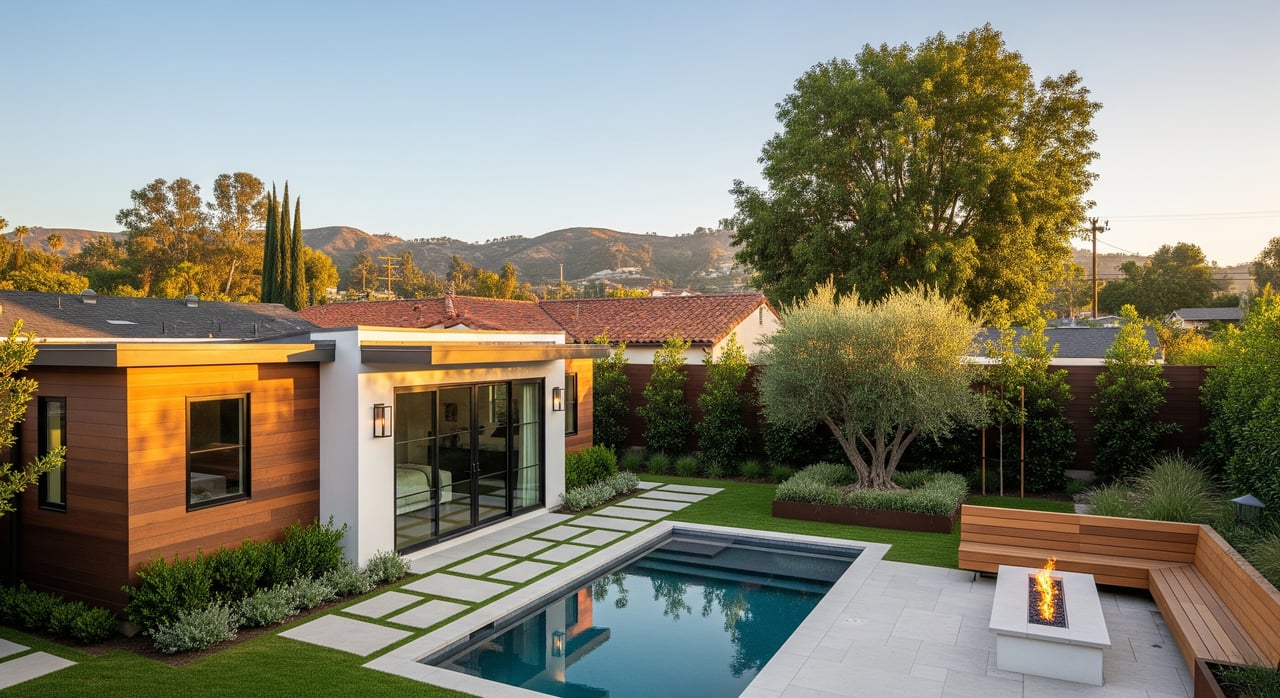
A new, freestanding structure in the backyard offers privacy and flexible site placement. Many owners prefer detached units for rental operations and property value.
A JADU is carved from existing space inside the primary home. It is smaller than a full ADU and typically uses a kitchenette. JADUs often require an internal connection option and have unique owner-occupancy nuances. Verify Glendale’s specific JADU standards.
State law allows ADUs within or behind multifamily buildings, with limits on the number and type. Local implementation varies, so confirm counts and conversion paths with Glendale before you design.
State law provides baseline size tiers and reduced setbacks for ADUs. Glendale can set objective caps within those limits, including different heights or second-story allowances in select zones. Always check the city’s current numeric standards for your lot.
Adding an ADU can impact lot coverage, floor-area ratio and open-space minimums. Ask Planning to confirm how an ADU will be counted on your parcel so you avoid a late-stage redesign.
Plan for sewer and water tie-ins, possible lateral upgrades, and electrical capacity checks. Separate meters are sometimes optional, but utility connection and impact fees can apply. Get Glendale’s fee schedule and ask about any required capacity upgrades early.
Your plans must meet fire, egress, smoke and CO alarm rules. If you are in a Very High Fire Hazard Severity Zone, additional requirements can apply. Hillside sites often trigger geotechnical studies and structural detailing that can shift cost and timeline.
Many cities require one off-street space per ADU unless you qualify for exemptions under state law. Common exemptions include sites within one-half mile of public transit, conversions within an existing structure, properties in certain historic areas, or where on-street permit parking is required but not available to ADU residents. Confirm how Glendale measures transit proximity and which exemptions apply before you commit to a layout.
On small lots, adding a space can trade yard area for paving and drive access. Price out curb cuts, paving and any drainage work if parking will be required.
JADUs are created inside the existing home and are capped smaller than full ADUs. They generally use a kitchenette and may require an internal connection option to the main dwelling. Owner-occupancy rules for ADUs have shifted at the state level, but local nuances for JADUs can remain. Verify Glendale’s latest approach, especially if you plan to rent the main house or the JADU.
Glendale has short-term rental rules that can affect ADUs and JADUs. If your strategy includes short stays, confirm registration and eligibility before you invest. Long-term rentals are typically the default planning assumption for ADUs.
Start with a counter meeting to identify zoning, overlays and needed studies. Ask how Glendale defines a complete application and what drawings they expect at submittal.
Assemble a site plan, floor plans, elevations, structural sheets, energy compliance, and utility diagrams. Hillside or grading work may require surveys and geotechnical reports.
Submit for plan check. For a complete application, state law sets a 60-day review window. Real timelines can run longer if revisions are requested, so respond quickly and keep your team coordinated.
Schedule inspections as you build. You will need final sign-off or a certificate of occupancy before you can rent the unit.
Below is a transparent, label-by-label example using hypothetical inputs for a 600 sq ft detached 1-bedroom ADU. Use this as a template and plug in your site-specific quotes and rent comps.
Mitigations that work: get written confirmation from Planning on jurisdictional constraints, involve an architect and structural engineer early, and collect three contractor bids with line items. If using debt, choose a lender experienced with ADU loans and confirm appraisal methodology for the added unit.
An ADU in Glendale can produce durable income and add meaningful value when you align design with local rules and budget discipline. Start with a quick feasibility screen, confirm your parking and overlay status, then price the work with contractors who know Glendale lots. When you have clear numbers and a clean path, execution gets faster and outcomes improve.
Ready to map your ADU options and returns on your specific lot? Schedule a strategy call with Richard Evanns to get a feasibility review, cost ranges and a site-specific pro forma.
Stay up to date on the latest real estate trends.
Work with a professional who understands the rhythm of Los Angeles real estate. Richard brings dedication, strategy, and vision to help you achieve your property goals.