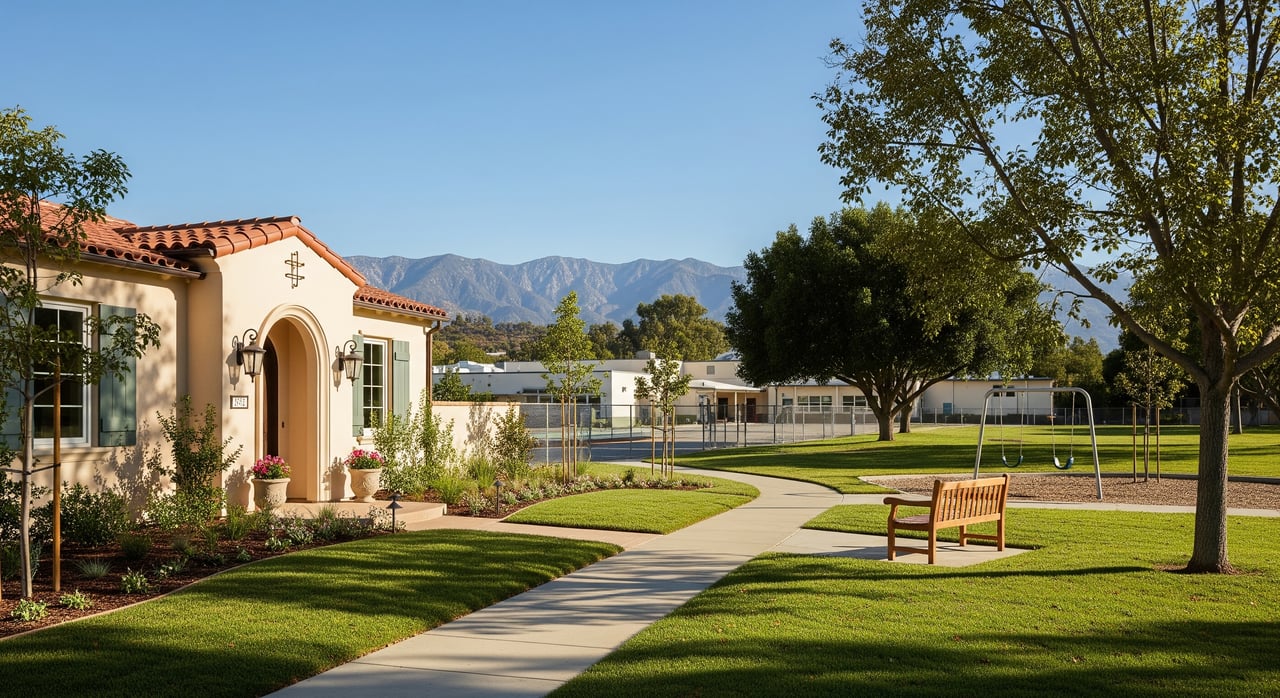
Family Living In Glendale: Schools, Parks And Daily Life
February 12, 2026
February 12, 2026
Thinking about putting down roots in Glendale? You’re not alone. Many families look here for a blend of city convenience, neighborhood parks, and a wide range of school options without paying top-tier coastal prices. In this guide, you’ll learn how Glendale’s schools, parks, commutes, and neighborhoods stack up so you can map daily life that fits your routine and budget. Let’s dive in.
Glendale sits just north of central Los Angeles, next to Burbank and Pasadena. You’ll find a mix of lively, walkable hubs near Downtown, the Glendale Galleria, and the Americana at Brand, plus quieter hillside and suburban pockets to the north and east. The community includes many family households and a wide range of housing, from central condos to single-family homes in the Verdugo foothills and La Crescenta/Montrose area.
Home prices and rents are typically above the Los Angeles County median but often below the most elite Westside and coastal neighborhoods. Central districts lean toward condos, apartments, and luxury rentals, while hillside and northern pockets offer more single-family homes and larger lots. Prices vary a lot by neighborhood, so it helps to compare housing type, yard size, and proximity to amenities.
Glendale is often perceived as relatively safe compared to many parts of LA. The city runs parks, recreation programs, and public library branches that many families use weekly. For current crime trends, review Glendale Police Department reports and municipal dashboards to understand recent patterns near any address you’re considering.
Most addresses in the city are served by Glendale Unified School District (GUSD). Some fringe pockets, including parts of La Crescenta, may fall into nearby districts, so confirm exact boundaries. Families typically look at elementary, middle, and high school options as well as district programs like magnets, transitional kindergarten, and after-school care.
You’ll see parents compare state test indicators, graduation results, AP or IB offerings, arts and STEM options, school culture, and extracurriculars. Many also look at feeder patterns from elementary to middle to high school. Because programs evolve, verify details directly with the district and each school site.
Glendale hosts a range of private and parochial schools, including Armenian-language and cultural programs and Catholic or other faith-based schools. Enrollment caps, tuition, and grade ranges can change year to year, so reach out to schools early for tours and timelines.
You’ll find playgrounds and community spaces in and around central Glendale, which is convenient if you want short walks to errands and after-school stops. Brand Park pairs open lawns with the Brand Library & Art Center for family programs. Verdugo Park offers sports fields, courts, a pool, and youth programming. Scholl Canyon provides nearby hiking and a municipal golf course. For bigger hikes and weekend nature time, many families head to Deukmejian Wilderness Park and the Verdugo Mountains.
The city and local nonprofits run Little League, youth soccer, basketball, dance, and gymnastics. Community centers and private providers offer martial arts and swim classes, and many schools host on-site or partner-run after-school programs during the week.
Glendale Public Library branches hold storytimes, summer reading, and homework help. The Alex Theatre and community arts groups program family-friendly shows. Nearby, families often make short trips to Kidspace Children’s Museum in Pasadena and to Griffith Park for museums, trails, and playgrounds. The Americana at Brand and Glendale Galleria also host events and make errands simple with dining and shopping in one place.
Glendale has local hospital services and pediatric providers, and you’re also close to major LA health systems. Because offerings can shift, confirm current pediatric specialties and availability directly with providers.
Glendale’s main arteries are SR-134 along the south edge and SR-2 running toward central LA. Many residents commute to Burbank, Downtown LA, Pasadena, and the Westside, and peak times can stretch travel. For flights, Hollywood Burbank Airport is typically about 10 to 25 minutes away depending on your starting point and traffic, while LAX usually takes longer.
The Glendale Transportation Center near downtown hosts Amtrak and some Metrolink commuter rail service. The city’s Beeline buses connect neighborhoods to shopping and transit nodes, and LA Metro routes cross parts of Glendale. You’ll find the best walkability in Downtown and around the Americana; hills and major arterials limit walking in many single-family areas, so check specific blocks when walkability matters.
Families often walk to nearby elementary schools where sidewalks and crossings are good. Others rely on district transportation where eligible, carpools, and after-school program pickups. Time test-runs for the morning bell and late-afternoon activities before you commit to a home.
You walk to coffee, take the Beeline or a short drive to preschool or TK, then spend afternoons at a central playground. Weekends might include library storytime and a movie at the Americana. You trade yard space for walkability and easy after-school activities.
Mornings start with a quick neighborhood school drop-off. Afternoons rotate between soccer at local fields and biking around the block. Weekend hikes in the foothills and grocery trips along Foothill Boulevard keep driving short and predictable.
You enjoy quiet streets and views, then plan errands in batches. Afternoons feature homework at home and a quick drive to Verdugo Park for practice. Weekend plans often include Scholl Canyon trails or a longer Verdugo Mountains hike.
You prioritize purchase price and freeway access for jobs in Burbank or Downtown LA. The tradeoff is more traffic near major corridors. Evenings and weekends often center on neighborhood parks and short drives to central Glendale amenities.
If you want a local, strategic partner to help compare Glendale streets, school boundaries, and property types with clear pros and cons, we can help you move with confidence. Schedule a strategy call with Richard Evanns to plan your next step.
Stay up to date on the latest real estate trends.

Work with a professional who understands the rhythm of Los Angeles real estate. Richard brings dedication, strategy, and vision to help you achieve your property goals.