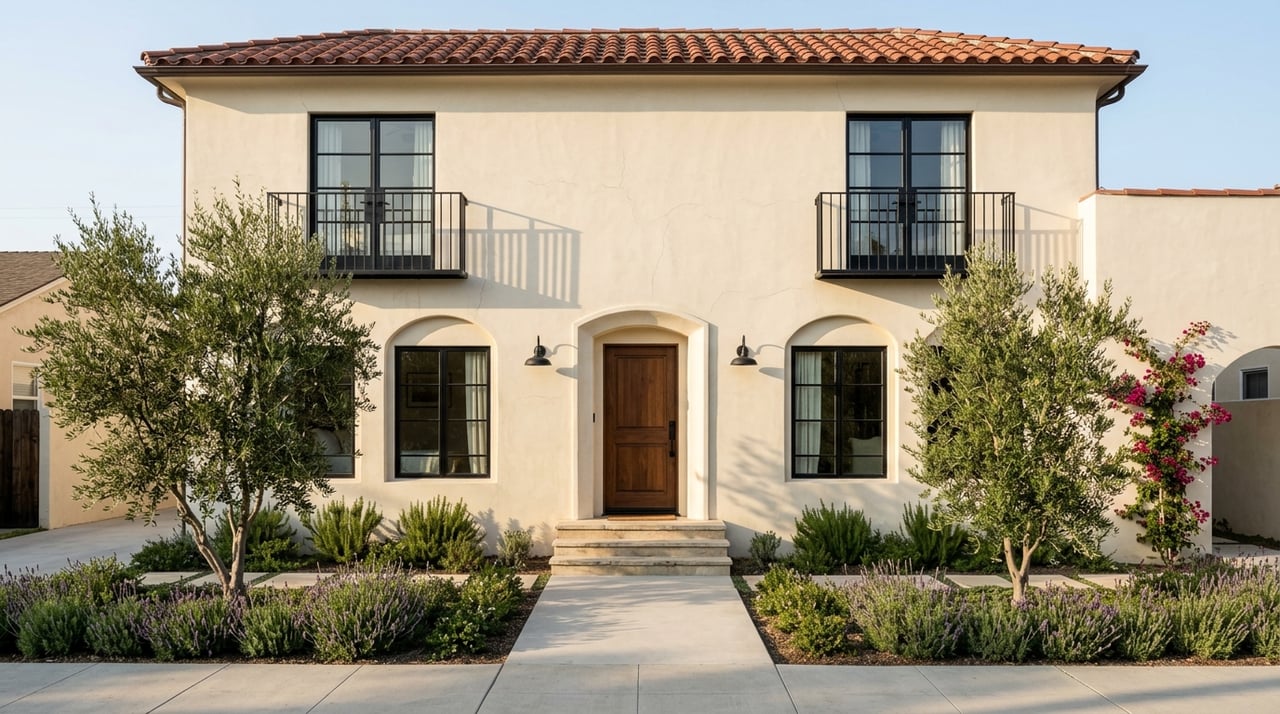
Glendale Small Multifamily Investing for Local Buyers
May 7, 2026
May 7, 2026
If you have been looking at Glendale small multifamily, you already know the appeal is real and the margin for error is small. This is a market with deep rental demand, older buildings, and city rules that can quickly change your numbers if you miss something early. In this guide, you will get a practical view of what Glendale’s small multifamily stock looks like, where investors need to focus their underwriting, and how to think about zoning, rent rules, parking, and ADU upside before you write an offer. Let’s dive in.
Glendale is a multifamily-heavy city with a large renter base. The City estimated about 75,425 housing units in 2015, with 61% in multifamily structures, including 6,985 buildings with 2 to 4 units, 21,885 buildings with 5 to 19 units, and 17,300 buildings with 20 or more units. A later city housing analysis put the total housing stock at 80,786 units in 2019.
For a local investor, that matters because Glendale is not mainly a blank-slate development story. It is a built-out market where the opportunity often comes from buying and improving what already exists. In plain terms, you are usually underwriting condition, compliance, and operations more than raw land potential.
The age of the housing stock reinforces that point. The City reported that about 20% of units were built before 1940, and 41% were built between 1940 and 1969. Only 400 units were built between 2010 and 2017, which helps explain why well-located older inventory remains such a big part of the investor conversation.
Glendale gives you something many investors want in Los Angeles County: a dense rental base in an established city with a large multifamily footprint. That can create steady demand for smaller apartment product, especially when the property offers updated interiors, functional layouts, and parking that works for the unit mix.
It also tends to reward investors who can execute. Because so much of the stock is older, returns may come from renovating units, handling deferred maintenance, improving operations, and identifying legal ways to add value rather than counting on dramatic new construction upside.
That is where disciplined local knowledge matters. A property that looks simple on a listing sheet can become more complex once you evaluate parking requirements, rent regulation, current code standards, and whether extra units or ADUs are actually feasible.
If you are reviewing a potential small multifamily acquisition, zoning is one of the first filters to apply. Glendale’s moderate- to high-density residential zones include R-3050, R-2250, R-1650, and R-1250. Those labels refer to intended density based on lot area per dwelling unit: 3,050, 2,250, 1,650, and 1,250 square feet of lot area per unit.
Multiple residential dwellings are listed land uses in Glendale’s residential district tables, subject to the city’s code requirements. The code summary also shows that primary buildings in these zones can reach up to 3 stories and 36 feet, or 2 stories and 26 feet on lots that are 90 feet wide or less.
That does not mean every lot is equally buildable or expandable. Parking, loading, and design review can all affect what is realistically possible on a specific parcel. Before you assume you can add units or significantly rework a building, you need project-level verification.
In Glendale, parking should not be treated as a minor detail. City planning materials summarize typical multifamily parking requirements at roughly:
For investors, the takeaway is simple. Parking can directly affect your renovation plan, your unit mix assumptions, and your ability to add legal units. A deal that looks attractive on price per unit can lose appeal fast if the site cannot support the layout you have in mind.
Glendale’s building rules were updated for projects submitted on or after January 1, 2026, which must comply with the 2025 California Building Standards Code and Glendale’s amendments. If you are planning a renovation, conversion, or ADU project, that can influence your timeline and costs.
This is especially important in an older housing market. Unit turns in aging buildings can uncover electrical, structural, or life-safety items that were not obvious during a quick walk-through. The deeper your value-add plan goes, the more important it is to budget for current code compliance rather than relying on cosmetic renovation assumptions.
When you underwrite rents in Glendale, it helps to think in ranges rather than looking for one perfect number. Public apartment listing sources show different snapshots of the market. Zillow shows an average rent of $2,500, Apartments.com shows an average of $2,100 with about $2,100 for one-bedroom units and $2,665 for two-bedroom units, and RentCafe shows an average of $2,907 with about $2,552 for one-bedroom units, $3,441 for two-bedroom units, and $3,911 for three-bedroom units.
Those differences do not mean the data is useless. They mean you should treat public asking rents as directional, then refine them based on the building’s actual condition, finish level, parking setup, and submarket position.
A practical underwriting takeaway is that Glendale’s smaller units often pencil in the low-$2,000s for one-bedroom product and the mid-$2,000s to mid-$3,000s for two-bedroom product, depending on the asset. If your projected rents require a premium outcome, your renovation scope and amenity package need to support that story.
Glendale’s regulatory picture is not something you want to gloss over. The city states that there is no rent control in Glendale, but tenants may be eligible for relocation assistance when they vacate in response to a rent increase above 7% of the prior 12-month rent. The city also points property owners back to California’s AB 1482, which caps covered annual increases at 5% plus CPI or 10%, whichever is lower.
There is also a just-cause layer to consider. Under AB 1482, just-cause protections generally apply after 12 months of tenancy, and the law exempts several property types, including housing with a certificate of occupancy from the previous 15 years, certain single-family owner-occupied homes, and owner-occupied duplexes.
At the same time, Glendale’s rental-rights materials say all rental units are covered by the city’s just-cause ordinance except certain exemptions, including parcels with two or fewer dwelling units, short-term hotel-type occupancy, and some subsidized units. The city also notes that a good-faith one-year lease offer can create an exemption if accepted. Because local and state rules do not line up perfectly in every case, parcel-level review is essential before you rely on a rent-growth or turnover strategy.
Glendale’s Rental Rights Program is active, and city staff direct landlords and tenants there for help on rent rules, evictions, lease issues, and property conditions. For an investor, that makes it a practical checkpoint during due diligence and before major operational changes.
This is not just about legal compliance. It is about protecting your business plan from surprises after closing.
For many Glendale investors, ADUs are one of the most interesting ways to create value without full redevelopment. Glendale allows ADUs on multifamily properties in two broad formats: conversion of existing non-livable space and detached new construction.
Existing permitted non-livable areas such as garages, storage rooms, laundry areas, or basements can be converted to at least one ADU. Additional conversion ADUs are capped at 25% of the existing dwelling units, rounded down.
Detached ADUs can also be an option. They start at two units and can scale up to the number of existing dwelling units, with a maximum cap of eight detached ADUs.
Even when ADUs are allowed, the site has to work. Glendale’s standards say detached ADUs must be at least 4 feet from interior property lines and no more than 16 feet high in standard cases. They may go up to 18 feet high if the property is in a high-quality transit area or within one-half mile of a major transit stop, with an additional 2 feet allowed for a matching roof pitch.
Applicants are also told to verify zoning compliance before submitting and to clear the project with Glendale Water and Power. In practice, that means ADU upside should be treated as a real opportunity, but never as a free bonus in your initial underwriting.
In Glendale, value-add usually works best when it is grounded in the realities of the existing building. Because the stock is older and the city is largely built out, the strongest plays are often operational and physical improvements rather than ambitious redevelopment assumptions.
A practical investor playbook often includes:
This kind of approach is especially useful in a city where older multifamily inventory dominates the landscape. It helps you focus on controllable upside instead of chasing assumptions that may not survive city review.
If part of your strategy involves flexible rental use, Glendale’s home-sharing rules are worth noting. The city allows limited host-on-site home-sharing, but prohibits vacation rentals where no host lives on site.
That means a traditional absentee short-term rental model should be treated as a compliance question first. If your acquisition depends on that income, you need to verify whether the actual use fits Glendale’s rules before you count it in the pro forma.
Before you move forward on a Glendale small multifamily deal, it helps to slow down and pressure-test the plan. Older buildings can offer compelling upside, but they also demand more detailed review than a surface-level rent comp and contractor walk.
Here are some of the most important items to check early:
In Glendale, strong investing usually comes from buying with a clear execution plan. The more you understand the city’s existing stock and operating rules before closing, the more confidently you can price risk and identify real upside.
If you want a local partner who can help you evaluate Glendale small multifamily through both an investor and execution lens, Richard Evanns can help you source opportunities, pressure-test the numbers, and build a plan that fits the property and the city’s rules.
Stay up to date on the latest real estate trends.


Work with a professional who understands the rhythm of Los Angeles real estate. Richard brings dedication, strategy, and vision to help you achieve your property goals.